


Reading Futures Intervention Program
Older students who struggle with reading need tools: concrete, reliable word-reading strategies they can use the moment they encounter difficulty. RFIP is a structured literacy intervention built specifically for adolescent readers at or below the 10th percentile, giving students in grades 4–12 the advanced decoding strategies, morphological knowledge, and vocabulary development needed to tackle academic texts with confidence.
More than Reading
RFIP goes beyond reading skills. It transforms the story students tell themselves about who they are as learners. When a student who has spent years avoiding text suddenly has a process that works, something shifts. Reading stops being an obstacle and becomes an opportunity to apply the strategies they own. That transformation is at the heart of everything RFIP does.
Three Pathways Forward
RFIP meets every student where they are and moves them forward with purpose. An initial diagnostic assessment identifies each student's specific skill profile, giving educators a clear picture from the outset of not just where a student belongs, but how quickly they are ready to move. Some students will accelerate through material; others will need more time and support. RFIP is built for both. Qualitative checks, along with built-in acceleration and deceleration resources, allow educators to adjust pace and intensity as students progress, ensuring instruction stays responsive to each learner.
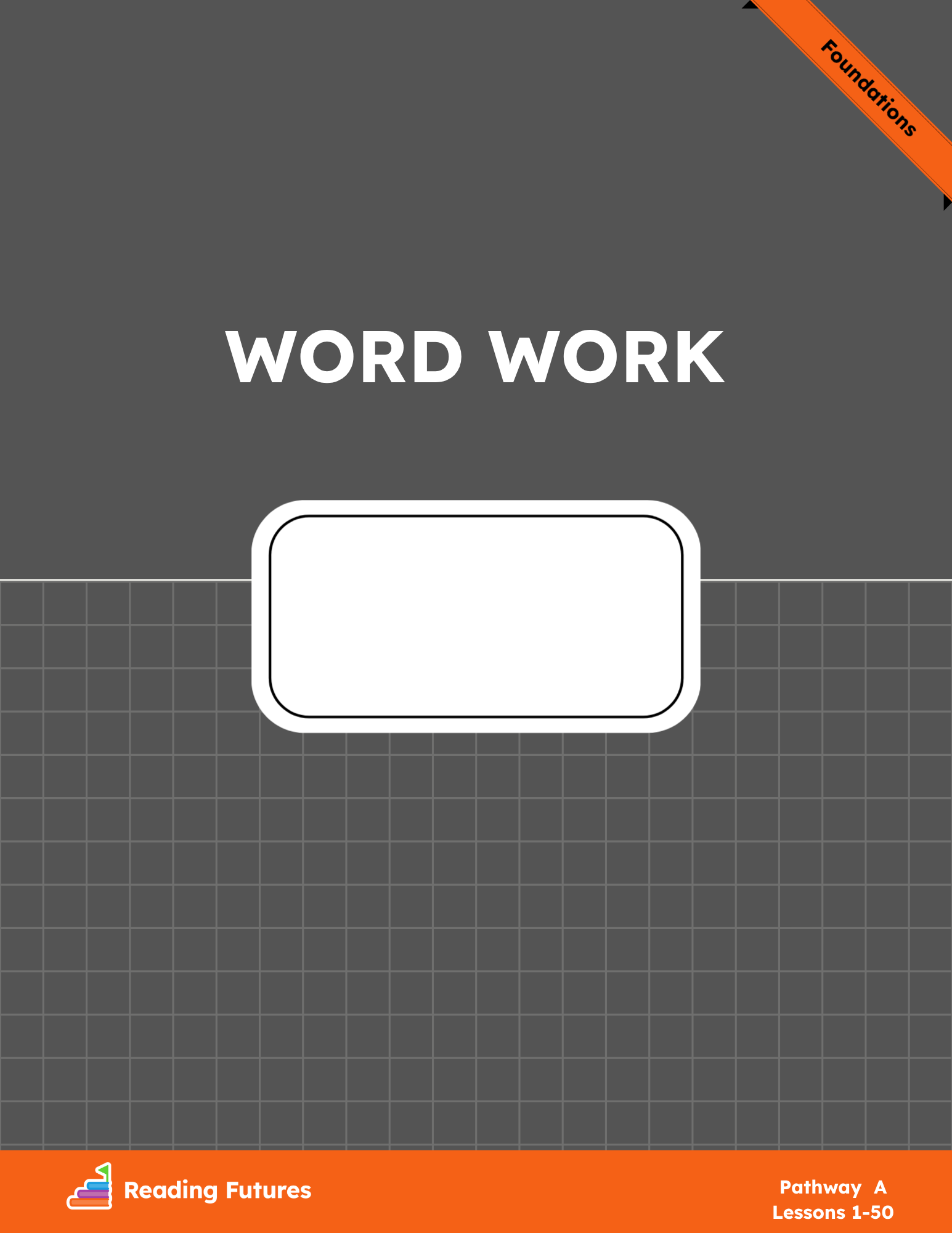
Pathway A
Pathway A is designed for students who need to rebuild from the very foundation, establishing the core print concepts and phonics knowledge that more advanced reading depends on.
120 Lessons
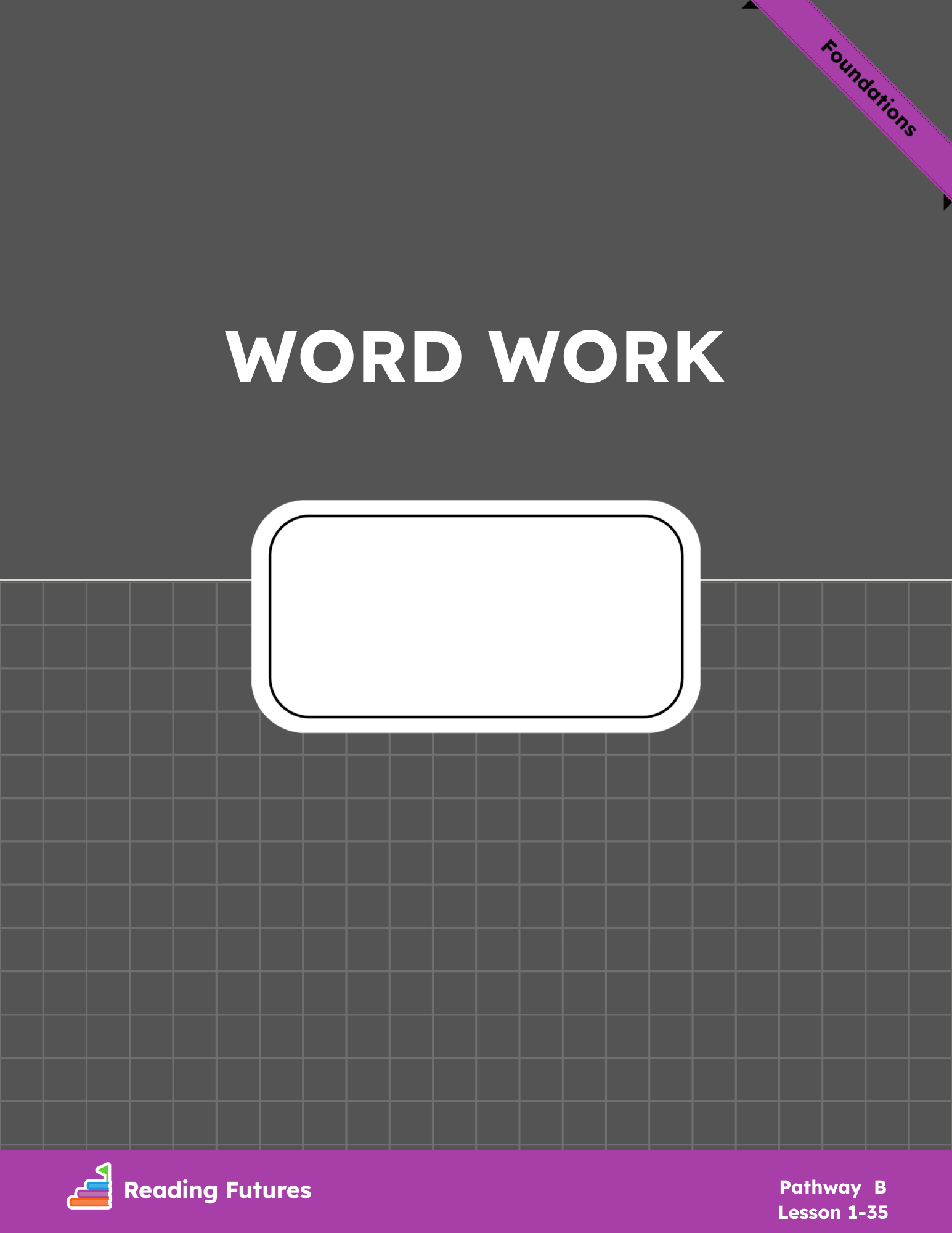
Pathway B
Pathway B is where the majority of students begin. It delivers systematic strategy instruction while closing skill gaps, giving students a clear, structured path to proficiency.
70 Lessons
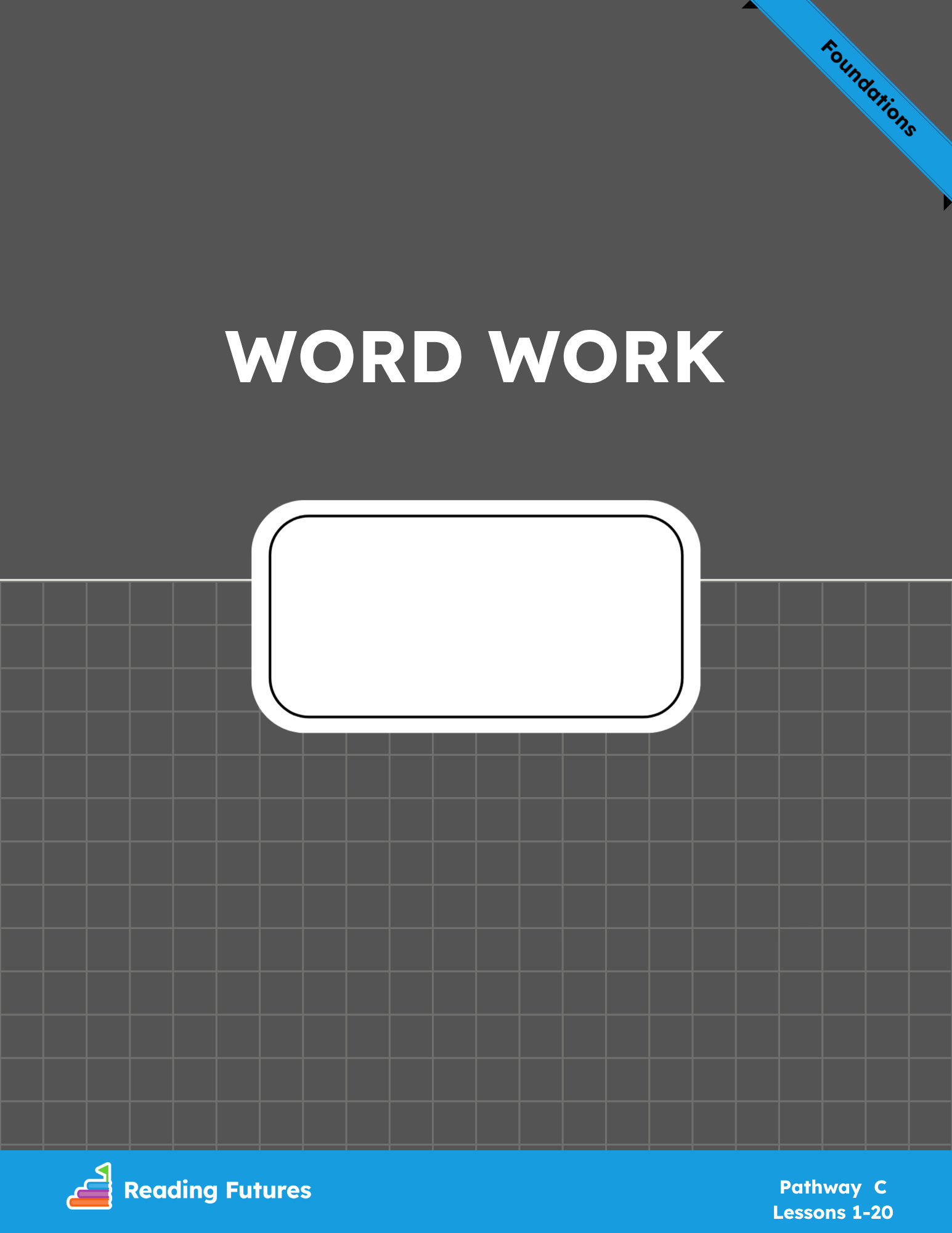
Pathway C
Pathway C moves at an accelerated pace for students who are ready, consolidating skills quickly and building the reading fluency that opens doors in every content area.
50 Lessons
Four Strategies That Build Independence
RFIP builds word-reading ability through four core strategies. What makes these strategies powerful for older learners isn't just what they teach; it's how they're taught. Each strategy comes with a clear metacognitive script: a set of self-talk steps students internalize and carry with them into any reading situation. Students develop the habits of skilled, strategic readers, learning to ask themselves the right questions and work through unfamiliar words with confidence and independence. Over time, these metacognitive scripts become automatic, giving students a powerful toolkit they can apply to any word, in any subject.
Blending
Blending gives students a baseline process for attacking unfamiliar words, or parts of words, by sounding out using continuation phonation (not stopping between sounds). A simple script develops a reliable internal process that teaches students to pay close attention to every single letter in a word.
Rhyming
Rhyming leverages the structure of English word families to decode larger lexical units. The script guides students to find the rhyme pattern, and use it to unlock an entire cluster of words at once. Students learn 45 of the most common and stable rhymes across English enabling them to decode hundreds of words early in the teaching sequence
Word Breakers
Word Breakers equips students to handle the long, multi-syllabic words that dominate academic and informational text typical in middle school and beyond. The metacognitive script teaches students to ask: Can I break this word into parts that I already know? Do I recognize a prefix or suffix? Rather than skipping or guessing the “big words,” students are empowered to break the words in manageable chunks. RFIP covers the 50 most common affixes giving students access to the morphological building blocks that appear most frequently in academic texts.
Word Study
Word Study builds both decoding and vocabulary simultaneously. Students engage in a structured four-step routine: they look closely at a word, identify and define any prefixes and suffixes, break the word into its component parts, and then write it in a sentence of their own. This isn't passive exposure; it's active word learning. Students build an understanding of how affixes signal meaning and how base words connect families of related terms. That morphological knowledge is among the most powerful vocabulary tools available to older readers, because it allows students to infer the meaning of words they've never seen before
Strong readers do more than decode words. They understand them. Throughout RFIP, students encounter what we call Interesting Words: high-utility academic vocabulary and content-specific terms that appear across subjects and disciplines. Interesting Words are woven throughout all activities, allowing students to explore the word's meaning and morphological features at the same time as learning to decode them. The result is students who can confidently read, understand, and use the sophisticated academic language that higher-level content demands.
Interesting Words
Applying Skills in Real Text: Topic Reads™
Once students reach base-level proficiency, RFIP transitions them into Topic Reads: a series of age-appropriate, high-interest informational texts authored by Dr. Elfrieda H. Hiebert, one of the nation's leading researchers in reading fluency and text complexity. Grounded in Dr. Hiebert's scholarship on text features and vocabulary development, each title is carefully calibrated to build fluency while giving students meaningful exposure to high-value academic vocabulary. Key words appear repeatedly across topics, reinforcing the Word Breakers strategy in context and deepening both word knowledge and background knowledge simultaneously.
For older students who have spent years on the sidelines of academic reading, Topic Reads are where strategy meets substance, and where students begin to experience themselves as capable readers of real, meaningful content. To learn more visit: www.textproject. org
Research Base
Our work builds on decades of research on effective intervention methods and programs for children with severe reading difficulties, along with emerging insights from modern brain imaging research. The essential findings that inform our work include:
Multi-component, strategy-based instruction is an effective and replicable method to improve word reading outcomes, even among older students (Lovett et al., 2021).
Instruction with accessible texts designed or selected for critical vocabulary can improve automaticity and comprehension (Hiebert, 2025b).
Word reading improvement in students with dyslexia or other related reading difficulties is linearly responsive to dosage of high-quality instruction (Donnelly et al., 2019).
Reading is an act of meaning-making: semantic processing intersects with orthography and phonology (Harm & Seidenberg, 2004).
We are also interested in some emerging research that resonates with our experience of the students we teach:
Children vary in their statistical learning efficiency and the organization of their reading systems, creating opportunities to vary instructional focus and pace (Siegelman et al., 2022).
Some dyslexic readers experience visual crowding and respond positively to increased font spacing (Joo et al., 2018; Zorzi et al., 2012).
We think of science as an endeavor, not an “answer.” We do our best to honor decades of serious research and development and to make our own contributions.
Chandler, B. W., Toste, J. R., Hart, E. J., & Kearns, D. M. (2024). Instruction to support word-level reading skills for adolescent learners with learning disabilities. Journal of Adolescent & Adult Literacy, 68(4), 380–39
Donnelly P. M., Huber E., & Yeatman J. D. (2019) Intensive Summer Intervention Drives Linear Growth of Reading Skill in Struggling Readers. Front. Psychol. 10:1900.
Harm, M. W., & Seidenberg, M. S. (2004). Computing the Meanings of Words in Reading: Cooperative Division of Labor Between Visual and Phonological Processes. Psychological Review, 111(3), 662–720.
Hiebert, E. H. (2012). Word Zones for 4,000 simple word families. TextProject.
Hiebert, E. H. (2020). Teaching words and how they work: Small changes for big vocabulary results. Teachers College Press.
Hiebert, E. H. (2025a). Flattening the developmental staircase: Lexical complexity progression in elementary reading texts across six decades. Education Sciences, 15(11), 1546.
Hiebert, E. H. (2025b). Unpacking automaticity: Scaffolded texts and comprehension. Journal of Adolescent & Adult Literacy, 68, 369–379.
Joo, S. J., White, A., Strodtman, D., & Yeatman, J. (2018). Optimizing text for an individual’s visual system: The contribution of visual crowding to reading difficulties. Cortex. 103.
Kearns, D. M., & Whaley, V. M. (2019). Helping students with dyslexia read long words: Using syllables and morphemes. Teaching Exceptional Children, 51(3), 212–225.
Lovett, M. W., Frijters, J. C., Steinbach, K. A., Sevcik, R. A., & Morris, R. D. (2021). Effective intervention for adolescents with reading disabilities: Combining reading and motivational remediation to improve outcomes. Journal of Educational Psychology, 113(4), 656–689.
Lovett, M. W., Lacerenza, L., Borden, S. L., Frijters, J. C., Steinbach, K. A., & De Palma, M. (2000). Components of effective remediation for developmental reading disabilities: Combining phonological and strategy-based instruction to improve outcomes. Journal of Educational Psychology, 92(2), 263–283.
Lovett, M. W., Lacerenza, L., & Borden, S. L. (2000). Putting struggling readers on the PHAST track: A program to integrate phonological and strategy-based remedial reading instruction and maximize outcomes. Journal of Learning Disabilities, 33(5), 458–476.
Siegelman, N., Rueckl, J. G., van den Bunt, M., Frijters, J. C., Zevin, J. D., Lovett, M. W., Seidenberg, M. S., Pugh, K. R., & Morris, R. D. (2022). How you read affects what you gain: Individual differences in the functional organization of the reading system predict intervention gains in children with reading disabilities. Journal of Educational Psychology, 114(4), 855–869.
Wolf, M., & Bowers, P. G. (1999). The double-deficit hypothesis for the developmental dyslexias. Journal of Educational Psychology, 91(3), 415–438.
Wolf, M., & Katzir-Cohen, T. (2001). Reading fluency and its intervention. Scientific Studies of Reading, 5(3), 211–239.
Wolf, M. (2007). Proust and the squid: The story and science of the reading brain. Harper.
Yeatman, J. D., McCloy, D. R., Caffarra, S., Clarke, M. D., Ender, S., Gijbels, L., Joo, S. J., Kubota, E. C., Kuhl, P. K., Larson, E., O'Brien, G., Peterson, E. R., Takada, M. E., & Taulu, S. (2024). Reading instruction causes changes in category-selective visual cortex. Brain Research Bulletin, 110958.
Zorzi, M., Barbiero, C., Facoetti, A., Lonciari, I., Carrozzi, M., Montico, M., Bravar, L., George, F., Pech-Georgel, C., & Ziegler, J. C. (2012). Extra-large letter spacing improves reading in dyslexia. Proceedings of the National Academy of Sciences, 109(28), 11455–11459.